Economy
| Kazakhstan is the largest nation and economy in Central Asia, and the ninth largest nation by area in the world. It possesses enormous fossil fuel reserves as well as minerals and metals. It also has considerable agricultural potential with its vast steppe lands accommodating both livestock and grain production, as well as developed space infrastructure, which took over all launches to the International Space Station from the Space Shuttle. The mountains in the south are important for apples and walnuts; both species grow wild there. Kazakhstan's industrial sector rests on the extraction and processing of these natural resources and also on a relatively large machine building sector specializing in construction equipment, tractors, agricultural machinery, and some military items. The breakup of the USSR and the collapse of demand for Kazakhstan's traditional heavy industry products have resulted in a sharp contraction of the economy since 1991, with the steepest annual decline occurring in 1994. In 1995-97 the pace of the government program of economic reform and privatization quickened, resulting in a substantial shifting of assets into the private sector. The December 1996 signing of the Caspian Pipeline Consortium agreement to build a new pipeline from western Kazakhstan's Tengiz Field to the Black Sea increases prospects for substantially larger oil exports in several years. Kazakhstan's economy turned downward in 1998 with a 2.5% decline in GDP growth due to slumping oil prices and the August financial crisis in Russia. A bright spot in 1999 was the recovery of international petroleum prices, which, combined with a well-timed tenge devaluation and a bumper grain harvest, pulled the economy out of recession. | ||
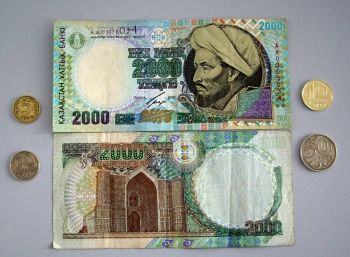
Kazakh money : Tenge |
||